
Muslim, Jewish, Hindu, Sikh and Buddhist prayers
Duas for anxiety and worry from the Qur'an
Duas many Muslims turn to for anxiety include the declaration that Allah is sufficient for us (Qur'an 3:173), the dua of Prophet Yunus in the whale (21:87) and the closing dua of Surah al-Baqarah (2:286), along with the reminder that hearts find rest in the remembrance of Allah (13:28). Pray them alongside practical help, and if anxiety is affecting your daily life, talk to a GP or doctor too.
Six Qur'an verses and duas for anxiety
ٱلَّذِينَ ءَامَنُوا۟ وَتَطْمَئِنُّ قُلُوبُهُم بِذِكْرِ ٱللَّهِ ۗ أَلَا بِذِكْرِ ٱللَّهِ تَطْمَئِنُّ ٱلْقُلُوبُ ﴿٢٨﴾
“Who have believed and whose hearts have rest in the remembrance of Allah. Verily in the remembrance of Allah do hearts find rest!”
Qur’an 13:28
Those who believe find their hearts at rest in the remembrance of Allah; a verse many people repeat to themselves when anxious.
لَا يُكَلِّفُ ٱللَّهُ نَفْسًا إِلَّا وُسْعَهَا ۚ لَهَا مَا كَسَبَتْ وَعَلَيْهَا مَا ٱكْتَسَبَتْ ۗ رَبَّنَا لَا تُؤَاخِذْنَآ إِن نَّسِينَآ أَوْ أَخْطَأْنَا ۚ رَبَّنَا وَلَا تَحْمِلْ عَلَيْنَآ إِصْرًۭا كَمَا حَمَلْتَهُۥ عَلَى ٱلَّذِينَ مِن قَبْلِنَا ۚ رَبَّنَا وَلَا تُحَمِّلْنَا مَا لَا طَاقَةَ لَنَا بِهِۦ ۖ وَٱعْفُ عَنَّا وَٱغْفِرْ لَنَا وَٱرْحَمْنَآ ۚ أَنتَ مَوْلَىٰنَا فَٱنصُرْنَا عَلَى ٱلْقَوْمِ ٱلْكَٰفِرِينَ ﴿٢٨٦﴾
“Allah tasketh not a soul beyond its scope. For it (is only) that which it hath earned, and against it (only) that which it hath deserved. Our Lord! Condemn us not if we forget, or miss the mark! Our Lord! Lay not on us such a burden as thou didst lay on those before us! Our Lord! Impose not on us that which we have not the strength to bear! Pardon us, absolve us and have mercy on us, Thou, our Protector, and give us victory over the disbelieving folk.”
Qur’an 2:286
The last verse of Surah al-Baqarah: no soul is burdened beyond what it can bear, followed by a dua for pardon, forgiveness and help.
ٱلَّذِينَ قَالَ لَهُمُ ٱلنَّاسُ إِنَّ ٱلنَّاسَ قَدْ جَمَعُوا۟ لَكُمْ فَٱخْشَوْهُمْ فَزَادَهُمْ إِيمَٰنًۭا وَقَالُوا۟ حَسْبُنَا ٱللَّهُ وَنِعْمَ ٱلْوَكِيلُ ﴿١٧٣﴾
“Those unto whom men said: Lo! the people have gathered against you, therefor fear them. (The threat of danger) but increased the faith of them and they cried: Allah is Sufficient for us! Most Excellent is He in Whom we trust!”
Qur’an 3:173
The believers, told that people had gathered against them, answered that Allah is sufficient for them and the best guardian; many Muslims repeat this phrase in its Arabic when afraid.
وَذَا ٱلنُّونِ إِذ ذَّهَبَ مُغَٰضِبًۭا فَظَنَّ أَن لَّن نَّقْدِرَ عَلَيْهِ فَنَادَىٰ فِى ٱلظُّلُمَٰتِ أَن لَّآ إِلَٰهَ إِلَّآ أَنتَ سُبْحَٰنَكَ إِنِّى كُنتُ مِنَ ٱلظَّٰلِمِينَ ﴿٨٧﴾
“And (mention) Dhu'n-Nun, when he went off in anger and deemed that We had no power over him, but he cried out in the darkness, saying: There is no Allah save Thee. Be Thou Glorified! Lo! I have been a wrong-doer.”
Qur’an 21:87
Prophet Yunus calling out from the darkness, declaring that there is no god but Allah and admitting his own wrong; a dua many say in moments of distress.
فَإِنَّ مَعَ ٱلْعُسْرِ يُسْرًا ﴿٥﴾ إِنَّ مَعَ ٱلْعُسْرِ يُسْرًۭا ﴿٦﴾
“But lo! with hardship goeth ease, Lo! with hardship goeth ease.”
Qur’an 94:5-6
Surah ash-Sharh repeats it twice: with hardship comes ease.
فَإِذَا بَلَغْنَ أَجَلَهُنَّ فَأَمْسِكُوهُنَّ بِمَعْرُوفٍ أَوْ فَارِقُوهُنَّ بِمَعْرُوفٍۢ وَأَشْهِدُوا۟ ذَوَىْ عَدْلٍۢ مِّنكُمْ وَأَقِيمُوا۟ ٱلشَّهَٰدَةَ لِلَّهِ ۚ ذَٰلِكُمْ يُوعَظُ بِهِۦ مَن كَانَ يُؤْمِنُ بِٱللَّهِ وَٱلْيَوْمِ ٱلْءَاخِرِ ۚ وَمَن يَتَّقِ ٱللَّهَ يَجْعَل لَّهُۥ مَخْرَجًۭا ﴿٢﴾ وَيَرْزُقْهُ مِنْ حَيْثُ لَا يَحْتَسِبُ ۚ وَمَن يَتَوَكَّلْ عَلَى ٱللَّهِ فَهُوَ حَسْبُهُۥٓ ۚ إِنَّ ٱللَّهَ بَٰلِغُ أَمْرِهِۦ ۚ قَدْ جَعَلَ ٱللَّهُ لِكُلِّ شَىْءٍۢ قَدْرًۭا ﴿٣﴾
“Then, when they have reached their term, take them back in kindness or part from them in kindness, and call to witness two just men among you, and keep your testimony upright for Allah. Whoso believeth in Allah and the Last Day is exhorted to act thus. And whosoever keepeth his duty to Allah, Allah will appoint a way out for him, And will provide for him from (a quarter) whence he hath no expectation. And whosoever putteth his trust in Allah, He will suffice him. Lo! Allah bringeth His command to pass. Allah hath set a measure for all things.”
Qur’an 65:2-3
Whoever is mindful of Allah, He makes a way out for them and provides from where they never expected; whoever relies on Allah, He is enough for them. These lines close a passage about divorce; the promise of a way out is widely quoted on its own.
Qur'an: Arabic text from the Tanzil Project (tanzil.net); English translation by Marmaduke Pickthall (1930), which is in the public domain. A translation conveys the meaning; the Qur'an itself is the Arabic.
A prayer you can pray
A dua in your own words for an anxious heart
O Allah, my heart is racing and my thoughts won't settle. You are the One who turns hearts; turn mine towards calm.
I hand You what I cannot control. Give me what is good for me, keep me from what is harmful, and let me rest in Your remembrance. Ameen.
Why anxiety can make dua feel hard
Anxiety fills the mind with what might go wrong, and it can make prayer feel distracted or empty. Some people also feel guilty, as if worry shows weak iman. The Qur'an doesn't treat worry that way: it records prophets in real distress, like Yunus in the darkness of the whale, calling on Allah. Duas from the Qur'an give you words when your own won't come, and repeating a short one slowly can calm the body as well as the heart. At the same time, persistent anxiety is also a health matter, and seeing a doctor or counsellor is not a lack of trust in Allah; it is taking the means while relying on Him.
How to use these duas when you're anxious
- 01
Pick one and say it slowly
Choose a single short dua, such as 3:173 or 21:87, and repeat it slowly with your breathing rather than reciting many quickly.
- 02
Make wudu and pray two rak'ahs
Many people find that the routine of wudu and a short prayer settles them before they make dua in sujud.
- 03
Look up the hadith dua for worry and grief
A well-known dua seeking refuge in Allah from worry and grief is reported in Sahih al-Bukhari. Learn its exact wording from a trusted book or teacher.
- 04
Take the means
Sleep, food, movement, and talking to someone help too. The NHS suggests writing worries down and setting a time to deal with them.
- 05
Get help if it's lasting
If anxiety lasts for weeks or stops you living your life, see your GP or doctor. If you are in crisis, call 999 or Samaritans on 116 123 in the UK.
What tends not to work
Telling yourself that anxiety means weak faith. Prophets felt distress and called on Allah in it.
Using dua instead of help. In Islam you tie your camel and trust Allah: take the means as well.
Reciting so quickly that the meaning is lost. One dua understood is worth more than many rushed.
Common questions
What is the best dua for anxiety?
There is no single best one, but many Muslims turn to the words of 3:173, that Allah is sufficient for us and the best guardian, the dua of Yunus (21:87) and the hadith dua seeking refuge from worry and grief, reported in Sahih al-Bukhari.
Is anxiety a sign of weak iman?
No. The Qur'an describes prophets and believers in fear and distress. Anxiety is a human experience and can also be a health condition; turning to Allah and getting help are both part of faith.
Can I make dua for anxiety in my own language?
Yes. Outside the formal prayer, dua can be made in any language, and Allah hears every word.
Where Vangie fits
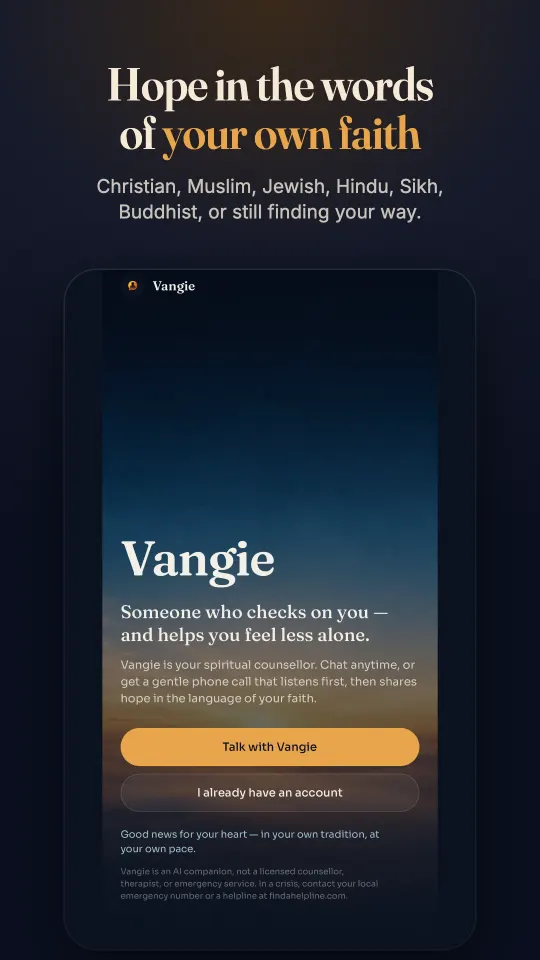
Someone who checks on you
Vangie is an AI companion you can talk to any time by chat, or on a gentle phone call that listens first. Choose Muslim as your tradition and she speaks from the Qur'an and hadith, searching for a verse before she quotes it rather than relying on memory, and she can make dua with you in your own words. She says Qur'an, not scripture, and never pushes another faith. You can schedule check-in calls for times that suit you, and she remembers what you've asked her to pray about so she can ask how it's going. She is not a scholar, imam or crisis line, and works best alongside your masjid, your family and people of knowledge you trust.
Sources and support
General information, not medical or mental health advice. Vangie is an AI companion: not a licensed counsellor, therapist, doctor or member of the clergy, and not an emergency service. If you are worried about your mental health, talk to your GP or doctor; in the UK, NHS 111 can help if you need urgent help but it isn't an emergency.