
Muslim, Jewish, Hindu, Sikh and Buddhist prayers
Loving-kindness (metta) meditation: a simple guide
Loving-kindness (metta) meditation means silently repeating warm wishes, such as "May I be safe, may I be happy, may I be healthy, may I live with ease", first for yourself, then for someone who has helped you, a friend, a neutral person, someone you find difficult, and finally all beings. Start with five to ten minutes a day.
Prayers you can pray
The phrases (our own wording of the traditional wishes)
May I be safe. May I be happy. May I be healthy. May I live with ease.
Then, for others: May you be safe. May you be happy. May you be healthy. May you live with ease.
And finally: May all beings be safe, happy, healthy, and live with ease.
A shorter version for hard days (our own words)
May I be kind to myself today. May the people I love be held. May the person I'm struggling with find peace, and may I find it too.
Why it can feel awkward at first
Metta comes from Buddhist teaching, where loving-kindness is one of the four brahmaviharas, the "divine abodes" of the heart, alongside compassion, sympathetic joy and equanimity. The practice is simple, but it rarely feels natural at first. Wishing yourself well can feel self-indulgent, and wishing well to someone who hurt you can feel false. That is expected. The practice isn't about forcing a feeling; it is about repeating an intention until it softens something, a little at a time. People of every faith and none use it today: Buddhist practitioners as part of their path, and others as a secular way to ease self-criticism and resentment. The NHS describes mindfulness, which shares some of its methods, as paying more attention to the present moment.
How to practise loving-kindness
- 01
Settle for a minute
Sit comfortably, close your eyes or lower your gaze, and notice a few breaths. Some people place a hand on the chest.
- 02
Begin with yourself
Silently repeat the phrases for yourself, slowly. If that is too hard, many teachers suggest starting with a benefactor instead and returning to yourself later.
- 03
A benefactor, then a friend
Picture someone who has been kind to you, and offer them the phrases. Then a good friend.
- 04
A neutral person, then someone difficult
Someone you see but don't know well, like a shopkeeper. Then, gently, someone you find difficult; start with someone mildly irritating, not the person who hurt you most.
- 05
All beings
Widen the wish to everyone, everywhere, without exception. Rest for a moment before you open your eyes.
- 06
Keep it short and regular
Five to ten minutes a day is enough to begin. Consistency matters more than length.
Within the tradition
- Theravada
- Metta bhavana (the cultivation of loving-kindness) is a classic meditation, and the Karaniya Metta Sutta, the Buddha's teaching on loving-kindness, is widely chanted.
- Mahayana and Tibetan
- Loving-kindness is often practised together with compassion and the wish to free all beings from suffering, sometimes in practices such as tonglen.
- Secular practice
- Mindfulness and wellbeing programmes teach loving-kindness without religious framing, as a way to build kindness towards yourself and others.
What tends not to work
Forcing a warm feeling. The intention is the practice; feelings come and go.
Starting with the person who hurt you most. Build up gradually.
Using it to bypass real harm. Wishing someone well doesn't mean tolerating abuse or staying in danger.
Common questions
What does metta mean?
Metta is a Pali word usually translated as loving-kindness or friendliness: a warm, unconditional wish for the wellbeing of yourself and others.
How long should a metta meditation be?
Five to ten minutes a day is a good start. Many people build up to twenty minutes or more.
Do I have to be Buddhist to practise loving-kindness?
No. It comes from Buddhist teaching, and people of every faith and none practise it today.
What if I feel nothing, or feel worse?
That's common, especially when directing kindness to yourself. Keep the practice gentle and short. If difficult feelings keep coming up, talking to someone you trust, or your GP, can help.
Where Vangie fits
Someone who checks on you
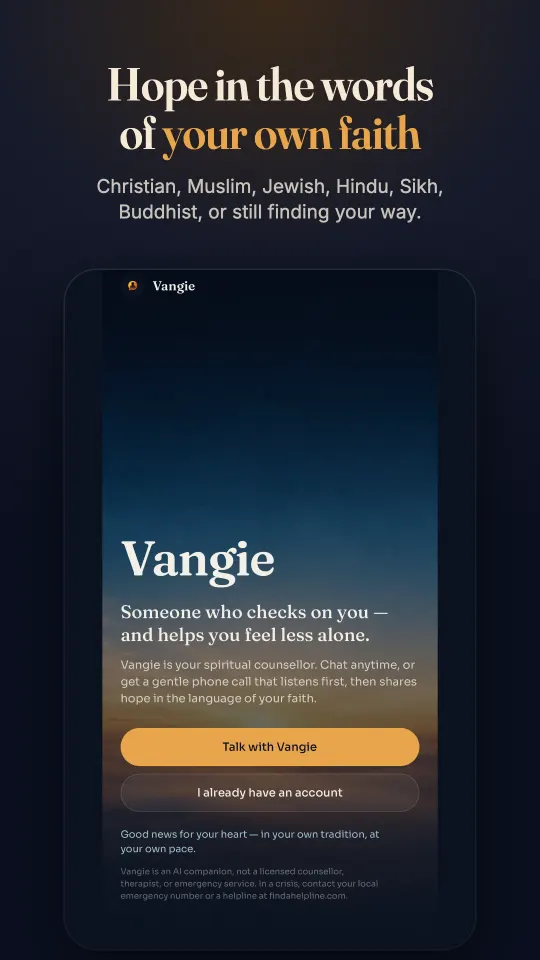
If you choose Buddhist, secular or still exploring as your tradition, Vangie meets you there. She can guide you through a short loving-kindness practice in chat or on a gentle phone call at a time you choose, reflect with you afterwards, and draw on texts from your tradition by search rather than from memory, without pushing any other path. She is an AI companion, not a meditation teacher or therapist.
Sources and support
General information, not medical or mental health advice. Vangie is an AI companion: not a licensed counsellor, therapist, doctor or member of the clergy, and not an emergency service. If you are worried about your mental health, talk to your GP or doctor; in the UK, NHS 111 can help if you need urgent help but it isn't an emergency.