
Muslim, Jewish, Hindu, Sikh and Buddhist prayers
Surah Ar-Rahman (55): Arabic, English and meaning
Surah Ar-Rahman, "The Most Merciful", is the 55th surah of the Qur'an, with 78 ayat. It lists the blessings of Allah in creation, the Hereafter and Paradise, and asks humankind and jinn, in a refrain repeated 31 times, which of their Lord's favours they will deny; scholars differ on whether it is Makki or Madani.
Surah Ar-Rahman in Arabic and English, section by section
ٱلرَّحْمَٰنُ ﴿١﴾ عَلَّمَ ٱلْقُرْءَانَ ﴿٢﴾ خَلَقَ ٱلْإِنسَٰنَ ﴿٣﴾ عَلَّمَهُ ٱلْبَيَانَ ﴿٤﴾ ٱلشَّمْسُ وَٱلْقَمَرُ بِحُسْبَانٍۢ ﴿٥﴾ وَٱلنَّجْمُ وَٱلشَّجَرُ يَسْجُدَانِ ﴿٦﴾ وَٱلسَّمَآءَ رَفَعَهَا وَوَضَعَ ٱلْمِيزَانَ ﴿٧﴾ أَلَّا تَطْغَوْا۟ فِى ٱلْمِيزَانِ ﴿٨﴾ وَأَقِيمُوا۟ ٱلْوَزْنَ بِٱلْقِسْطِ وَلَا تُخْسِرُوا۟ ٱلْمِيزَانَ ﴿٩﴾ وَٱلْأَرْضَ وَضَعَهَا لِلْأَنَامِ ﴿١٠﴾ فِيهَا فَٰكِهَةٌۭ وَٱلنَّخْلُ ذَاتُ ٱلْأَكْمَامِ ﴿١١﴾ وَٱلْحَبُّ ذُو ٱلْعَصْفِ وَٱلرَّيْحَانُ ﴿١٢﴾ فَبِأَىِّ ءَالَآءِ رَبِّكُمَا تُكَذِّبَانِ ﴿١٣﴾
“The Beneficent Hath made known the Qur'an. He hath created man. He hath taught him utterance. The sun and the moon are made punctual. The stars and the trees prostrate. And the sky He hath uplifted; and He hath set the measure, That ye exceed not the measure, But observe the measure strictly, nor fall short thereof. And the earth hath He appointed for (His) creatures, Wherein are fruit and sheathed palm-trees, Husked grain and scented herb. Which is it, of the favours of your Lord, that ye deny?”
Qur’an 55:1-13
The Most Merciful taught the Qur'an, created humankind and taught it speech, and set up the balance of creation, so people should not transgress it. The first refrain closes the section.
خَلَقَ ٱلْإِنسَٰنَ مِن صَلْصَٰلٍۢ كَٱلْفَخَّارِ ﴿١٤﴾ وَخَلَقَ ٱلْجَآنَّ مِن مَّارِجٍۢ مِّن نَّارٍۢ ﴿١٥﴾ فَبِأَىِّ ءَالَآءِ رَبِّكُمَا تُكَذِّبَانِ ﴿١٦﴾ رَبُّ ٱلْمَشْرِقَيْنِ وَرَبُّ ٱلْمَغْرِبَيْنِ ﴿١٧﴾ فَبِأَىِّ ءَالَآءِ رَبِّكُمَا تُكَذِّبَانِ ﴿١٨﴾ مَرَجَ ٱلْبَحْرَيْنِ يَلْتَقِيَانِ ﴿١٩﴾ بَيْنَهُمَا بَرْزَخٌۭ لَّا يَبْغِيَانِ ﴿٢٠﴾ فَبِأَىِّ ءَالَآءِ رَبِّكُمَا تُكَذِّبَانِ ﴿٢١﴾ يَخْرُجُ مِنْهُمَا ٱللُّؤْلُؤُ وَٱلْمَرْجَانُ ﴿٢٢﴾ فَبِأَىِّ ءَالَآءِ رَبِّكُمَا تُكَذِّبَانِ ﴿٢٣﴾ وَلَهُ ٱلْجَوَارِ ٱلْمُنشَـَٔاتُ فِى ٱلْبَحْرِ كَٱلْأَعْلَٰمِ ﴿٢٤﴾ فَبِأَىِّ ءَالَآءِ رَبِّكُمَا تُكَذِّبَانِ ﴿٢٥﴾
“He created man of clay like the potter's, And the jinn did He create of smokeless fire. Which is it, of the favours of your Lord, that ye deny? Lord of the two Easts, and Lord of the two Wests! Which is it, of the favours of your Lord, that ye deny? He hath loosed the two seas. They meet. There is a barrier between them. They encroach not (one upon the other). Which is it, of the favours of your Lord, that ye deny? There cometh forth from both of them the pearl and coral-stone. Which is it, of the favours of your Lord, that ye deny? His are the ships displayed upon the sea, like banners. Which is it, of the favours of your Lord, that ye deny?”
Qur’an 55:14-25
Humankind was created from clay and the jinn from smokeless fire. The two easts and two wests, the two seas that meet without mixing, pearls and coral, and ships on the sea are all named as signs.
كُلُّ مَنْ عَلَيْهَا فَانٍۢ ﴿٢٦﴾ وَيَبْقَىٰ وَجْهُ رَبِّكَ ذُو ٱلْجَلَٰلِ وَٱلْإِكْرَامِ ﴿٢٧﴾ فَبِأَىِّ ءَالَآءِ رَبِّكُمَا تُكَذِّبَانِ ﴿٢٨﴾ يَسْـَٔلُهُۥ مَن فِى ٱلسَّمَٰوَٰتِ وَٱلْأَرْضِ ۚ كُلَّ يَوْمٍ هُوَ فِى شَأْنٍۢ ﴿٢٩﴾ فَبِأَىِّ ءَالَآءِ رَبِّكُمَا تُكَذِّبَانِ ﴿٣٠﴾ سَنَفْرُغُ لَكُمْ أَيُّهَ ٱلثَّقَلَانِ ﴿٣١﴾ فَبِأَىِّ ءَالَآءِ رَبِّكُمَا تُكَذِّبَانِ ﴿٣٢﴾ يَٰمَعْشَرَ ٱلْجِنِّ وَٱلْإِنسِ إِنِ ٱسْتَطَعْتُمْ أَن تَنفُذُوا۟ مِنْ أَقْطَارِ ٱلسَّمَٰوَٰتِ وَٱلْأَرْضِ فَٱنفُذُوا۟ ۚ لَا تَنفُذُونَ إِلَّا بِسُلْطَٰنٍۢ ﴿٣٣﴾ فَبِأَىِّ ءَالَآءِ رَبِّكُمَا تُكَذِّبَانِ ﴿٣٤﴾ يُرْسَلُ عَلَيْكُمَا شُوَاظٌۭ مِّن نَّارٍۢ وَنُحَاسٌۭ فَلَا تَنتَصِرَانِ ﴿٣٥﴾ فَبِأَىِّ ءَالَآءِ رَبِّكُمَا تُكَذِّبَانِ ﴿٣٦﴾
“Everyone that is thereon will pass away; There remaineth but the Countenance of thy Lord of Might and Glory. Which is it, of the favours of your Lord, that ye deny? All that are in the heavens and the earth entreat Him. Every day He exerciseth (universal) power. Which is it, of the favours of your Lord, that ye deny? We shall dispose of you, O ye two dependents (man and jinn). Which is it, of the favours of your Lord, that ye deny? O company of jinn and men, if ye have power to penetrate (all) regions of the heavens and the earth, then penetrate (them)! Ye will never penetrate them save with (Our) sanction. Which is it, of the favours of your Lord, that ye deny? There will be sent, against you both, heat of fire and flash of brass, and ye will not escape. Which is it, of the favours of your Lord, that ye deny?”
Qur’an 55:26-36
Everything on earth passes away, and only the Face of the Lord remains. All in the heavens and earth ask of Him, and jinn and humans are told they cannot pass beyond the regions of the heavens and earth without His authority.
فَإِذَا ٱنشَقَّتِ ٱلسَّمَآءُ فَكَانَتْ وَرْدَةًۭ كَٱلدِّهَانِ ﴿٣٧﴾ فَبِأَىِّ ءَالَآءِ رَبِّكُمَا تُكَذِّبَانِ ﴿٣٨﴾ فَيَوْمَئِذٍۢ لَّا يُسْـَٔلُ عَن ذَنۢبِهِۦٓ إِنسٌۭ وَلَا جَآنٌّۭ ﴿٣٩﴾ فَبِأَىِّ ءَالَآءِ رَبِّكُمَا تُكَذِّبَانِ ﴿٤٠﴾ يُعْرَفُ ٱلْمُجْرِمُونَ بِسِيمَٰهُمْ فَيُؤْخَذُ بِٱلنَّوَٰصِى وَٱلْأَقْدَامِ ﴿٤١﴾ فَبِأَىِّ ءَالَآءِ رَبِّكُمَا تُكَذِّبَانِ ﴿٤٢﴾ هَٰذِهِۦ جَهَنَّمُ ٱلَّتِى يُكَذِّبُ بِهَا ٱلْمُجْرِمُونَ ﴿٤٣﴾ يَطُوفُونَ بَيْنَهَا وَبَيْنَ حَمِيمٍ ءَانٍۢ ﴿٤٤﴾ فَبِأَىِّ ءَالَآءِ رَبِّكُمَا تُكَذِّبَانِ ﴿٤٥﴾
“And when the heaven splitteth asunder and becometh rosy like red hide - Which is it, of the favours of your Lord, that ye deny? - On that day neither man nor jinni will be questioned of his sin. Which is it, of the favours of your Lord, that ye deny? The guilty will be known by their marks, and will be taken by the forelocks and the feet. Which is it, of the favours of your Lord, that ye deny? This is hell which the guilty deny. They go circling round between it and fierce, boiling water. Which is it, of the favours of your Lord, that ye deny?”
Qur’an 55:37-45
A picture of the Day of Judgement, when the heaven is split and the guilty are known by their marks.
وَلِمَنْ خَافَ مَقَامَ رَبِّهِۦ جَنَّتَانِ ﴿٤٦﴾ فَبِأَىِّ ءَالَآءِ رَبِّكُمَا تُكَذِّبَانِ ﴿٤٧﴾ ذَوَاتَآ أَفْنَانٍۢ ﴿٤٨﴾ فَبِأَىِّ ءَالَآءِ رَبِّكُمَا تُكَذِّبَانِ ﴿٤٩﴾ فِيهِمَا عَيْنَانِ تَجْرِيَانِ ﴿٥٠﴾ فَبِأَىِّ ءَالَآءِ رَبِّكُمَا تُكَذِّبَانِ ﴿٥١﴾ فِيهِمَا مِن كُلِّ فَٰكِهَةٍۢ زَوْجَانِ ﴿٥٢﴾ فَبِأَىِّ ءَالَآءِ رَبِّكُمَا تُكَذِّبَانِ ﴿٥٣﴾ مُتَّكِـِٔينَ عَلَىٰ فُرُشٍۭ بَطَآئِنُهَا مِنْ إِسْتَبْرَقٍۢ ۚ وَجَنَى ٱلْجَنَّتَيْنِ دَانٍۢ ﴿٥٤﴾ فَبِأَىِّ ءَالَآءِ رَبِّكُمَا تُكَذِّبَانِ ﴿٥٥﴾ فِيهِنَّ قَٰصِرَٰتُ ٱلطَّرْفِ لَمْ يَطْمِثْهُنَّ إِنسٌۭ قَبْلَهُمْ وَلَا جَآنٌّۭ ﴿٥٦﴾ فَبِأَىِّ ءَالَآءِ رَبِّكُمَا تُكَذِّبَانِ ﴿٥٧﴾ كَأَنَّهُنَّ ٱلْيَاقُوتُ وَٱلْمَرْجَانُ ﴿٥٨﴾ فَبِأَىِّ ءَالَآءِ رَبِّكُمَا تُكَذِّبَانِ ﴿٥٩﴾ هَلْ جَزَآءُ ٱلْإِحْسَٰنِ إِلَّا ٱلْإِحْسَٰنُ ﴿٦٠﴾ فَبِأَىِّ ءَالَآءِ رَبِّكُمَا تُكَذِّبَانِ ﴿٦١﴾
“But for him who feareth the standing before his Lord there are two gardens. Which is it, of the favours of your Lord, that ye deny? Of spreading branches. Which is it, of the favours of your Lord, that ye deny? Wherein are two fountains flowing. Which is it, of the favours of your Lord, that ye deny? Wherein is every kind of fruit in pairs. Which is it, of the favours of your Lord, that ye deny? Reclining upon couches lined with silk brocade, the fruit of both the gardens near to hand. Which is it, of the favours of your Lord, that ye deny? Therein are those of modest gaze, whom neither man nor jinni will have touched before them. Which is it, of the favours of your Lord, that ye deny? (In beauty) like the jacynth and the coral-stone. Which is it, of the favours of your Lord, that ye deny? Is the reward of goodness aught save goodness? Which is it, of the favours of your Lord, that ye deny?”
Qur’an 55:46-61
Two gardens are promised for whoever fears standing before their Lord, with flowing springs, fruit in pairs and companions of modest gaze. Goodness is answered with goodness.
وَمِن دُونِهِمَا جَنَّتَانِ ﴿٦٢﴾ فَبِأَىِّ ءَالَآءِ رَبِّكُمَا تُكَذِّبَانِ ﴿٦٣﴾ مُدْهَآمَّتَانِ ﴿٦٤﴾ فَبِأَىِّ ءَالَآءِ رَبِّكُمَا تُكَذِّبَانِ ﴿٦٥﴾ فِيهِمَا عَيْنَانِ نَضَّاخَتَانِ ﴿٦٦﴾ فَبِأَىِّ ءَالَآءِ رَبِّكُمَا تُكَذِّبَانِ ﴿٦٧﴾ فِيهِمَا فَٰكِهَةٌۭ وَنَخْلٌۭ وَرُمَّانٌۭ ﴿٦٨﴾ فَبِأَىِّ ءَالَآءِ رَبِّكُمَا تُكَذِّبَانِ ﴿٦٩﴾ فِيهِنَّ خَيْرَٰتٌ حِسَانٌۭ ﴿٧٠﴾ فَبِأَىِّ ءَالَآءِ رَبِّكُمَا تُكَذِّبَانِ ﴿٧١﴾ حُورٌۭ مَّقْصُورَٰتٌۭ فِى ٱلْخِيَامِ ﴿٧٢﴾ فَبِأَىِّ ءَالَآءِ رَبِّكُمَا تُكَذِّبَانِ ﴿٧٣﴾ لَمْ يَطْمِثْهُنَّ إِنسٌۭ قَبْلَهُمْ وَلَا جَآنٌّۭ ﴿٧٤﴾ فَبِأَىِّ ءَالَآءِ رَبِّكُمَا تُكَذِّبَانِ ﴿٧٥﴾ مُتَّكِـِٔينَ عَلَىٰ رَفْرَفٍ خُضْرٍۢ وَعَبْقَرِىٍّ حِسَانٍۢ ﴿٧٦﴾ فَبِأَىِّ ءَالَآءِ رَبِّكُمَا تُكَذِّبَانِ ﴿٧٧﴾ تَبَٰرَكَ ٱسْمُ رَبِّكَ ذِى ٱلْجَلَٰلِ وَٱلْإِكْرَامِ ﴿٧٨﴾
“And beside them are two other gardens, Which is it, of the favours of your Lord, that ye deny? Dark green with foliage. Which is it, of the favours of your Lord, that ye deny? Wherein are two abundant springs. Which is it, of the favours of your Lord, that ye deny? Wherein is fruit, the date-palm and pomegranate. Which is it, of the favours of your Lord, that ye deny? Wherein (are found) the good and beautiful - Which is it, of the favours of your Lord, that ye deny? - Fair ones, close-guarded in pavilions - Which is it, of the favours of your Lord, that ye deny? - Whom neither man nor jinni will have touched before them - Which is it, of the favours of your Lord, that ye deny? Reclining on green cushions and fair carpets. Which is it, of the favours of your Lord, that ye deny? Blessed be the name of thy Lord, Mighty and glorious!”
Qur’an 55:62-78
Two further gardens are described, green and well watered. The surah ends by blessing the name of the Lord, full of majesty and honour.
Qur'an: Arabic text from the Tanzil Project (tanzil.net); English translation by Marmaduke Pickthall (1930), which is in the public domain. A translation conveys the meaning; the Qur'an itself is the Arabic.
A prayer you can pray
A dua of thanks in your own words
O Allah, Most Merciful, You have given me more than I can count. Forgive me for the favours I have taken for granted.
Open my eyes to Your blessings today, make me grateful in hardship and in ease, and let my thanks show in how I treat the people around me. Ameen.
Why Muslims recite it
Ar-Rahman is one of the most loved surahs to listen to. Its rhythm is unmistakable: after each group of blessings, the same question returns, addressed to two audiences at once, humankind and the jinn. The effect is a kind of gentle cross-examination of the heart. The sun and moon on their courses, the balance set in the heavens, fruit and grain, the meeting of two seas with a barrier between them, ships like mountains on the water: each is named, and each time the listener is asked how they could deny it. Many people recite or play it when they feel ungrateful or overwhelmed, because it turns attention back to everything already given. It also holds hope and warning side by side, describing the end of all things except the Face of their Lord, a day of reckoning, and then gardens for those who feared standing before Him. Reciting it slowly, refrain by refrain, becomes a practice of gratitude.
What can help?
- 01
Listen before you read
Ar-Rahman is often first loved through recitation. Listening to a reciter you trust, with the translation open, lets the refrain do its work.
- 02
Pause at each refrain
Each time the question returns, stop and name one favour from your own day: health, a person, a meal, a moment of quiet. The surah becomes a gratitude practice.
- 03
Notice the two audiences
The refrain speaks to two at once, humankind and the jinn. The surah treats creation as one great sign that everyone, seen and unseen, is invited to recognise.
- 04
Read the sections, not just single ayat
Blessings, the passing of all things, judgement and the gardens follow a deliberate order. Reading a full section keeps hope and warning in balance.
- 05
Learn it in small portions
If you want to memorise it, take one section at a time. The repeated refrain makes Ar-Rahman easier to hold in memory than its length suggests.
Across schools and traditions
- Makki or Madani
- Scholars differ on where Ar-Rahman was revealed. Many classical commentators held it was Makki, while the standard printed mushaf (the Madinah print) labels it Madani. Both views are found in the major tafsir works.
- Recitation styles
- Ar-Rahman is recited in every style, from slow tartil to the melodic tajwid of well-known qaris. Many families play it at home, and it is often heard at gatherings and on the radio in Muslim countries.
What tends not to work
Racing through to reach the end. The refrain is meant to slow you down.
Treating it only as background sound. Listening is good; understanding even one section adds a great deal.
Reading the gardens without the warning, or the warning without the mercy. The surah holds them together.
Common questions
How many times is the refrain repeated in Surah Ar-Rahman?
The question asking which of your Lord's favours you will deny is repeated 31 times across the surah's 78 ayat.
Who is the refrain addressed to?
The Arabic is in the dual form, addressed to two groups. Commentators explain these as humankind and the jinn, both of whom are mentioned in the surah.
Is Surah Ar-Rahman Makki or Madani?
Scholars differ: many classical commentators held it was Makki, while the standard printed mushaf labels it Madani.
Can I listen to Surah Ar-Rahman for healing or comfort?
Many Muslims listen to it for comfort and reflection, and that is a good practice. Specific claims that it cures particular illnesses are not established, so pair it with dua and with proper medical care.
Where Vangie fits
Someone who checks on you
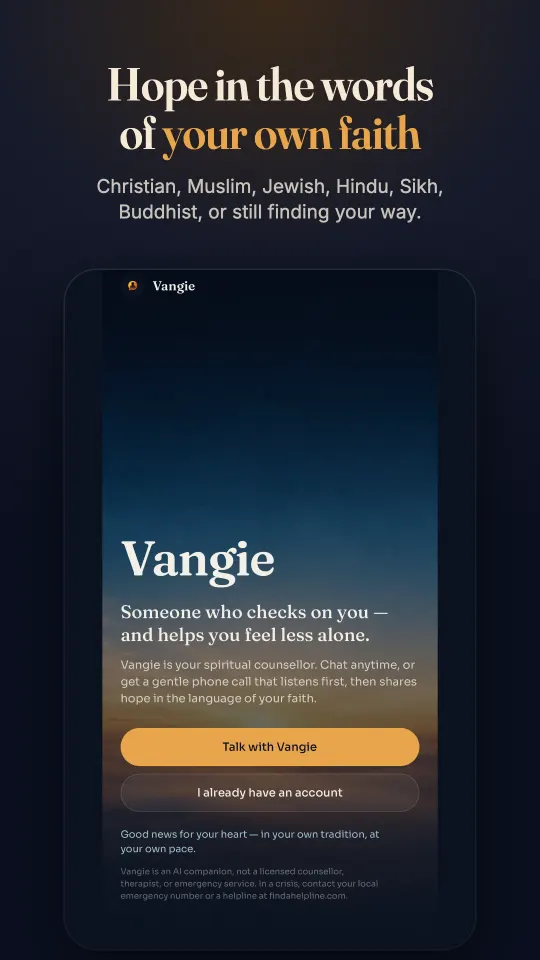
Vangie is an AI companion you can talk to any time by chat, or on a gentle phone call that listens first. Choose Muslim as your tradition and she speaks from the Qur'an and hadith, searching for a verse before she quotes it rather than relying on memory, and she can make dua with you in your own words. She says Qur'an, not scripture, and never pushes another faith. You can schedule check-in calls for times that suit you, and she remembers what you've asked her to pray about so she can ask how it's going. She is not a scholar, imam or crisis line, and works best alongside your masjid, your family and people of knowledge you trust.
General information, not medical or mental health advice. Vangie is an AI companion: not a licensed counsellor, therapist, doctor or member of the clergy, and not an emergency service. If you are worried about your mental health, talk to your GP or doctor; in the UK, NHS 111 can help if you need urgent help but it isn't an emergency.