
Muslim, Jewish, Hindu, Sikh and Buddhist prayers
Surah Al-Waqiah (56): Arabic, English and meaning
Surah Al-Waqiah, "The Inevitable Event", is the 56th surah of the Qur'an: a Makki surah of 96 ayat. It describes the Day of Judgement, when people will be sorted into three groups, the foremost, the companions of the right and the companions of the left, and it points to the signs of Allah's power in human creation, crops, water and fire.
Surah Al-Waqiah in Arabic and English, section by section
إِذَا وَقَعَتِ ٱلْوَاقِعَةُ ﴿١﴾ لَيْسَ لِوَقْعَتِهَا كَاذِبَةٌ ﴿٢﴾ خَافِضَةٌۭ رَّافِعَةٌ ﴿٣﴾ إِذَا رُجَّتِ ٱلْأَرْضُ رَجًّۭا ﴿٤﴾ وَبُسَّتِ ٱلْجِبَالُ بَسًّۭا ﴿٥﴾ فَكَانَتْ هَبَآءًۭ مُّنۢبَثًّۭا ﴿٦﴾ وَكُنتُمْ أَزْوَٰجًۭا ثَلَٰثَةًۭ ﴿٧﴾
“When the event befalleth - There is no denying that it will befall - Abasing (some), exalting (others); When the earth is shaken with a shock And the hills are ground to powder So that they become a scattered dust, And ye will be three kinds.”
Qur’an 56:1-7
When the Event comes, no one will deny it. It will bring some low and raise others high; the earth will be shaken and the mountains crumbled, and people will be sorted into three kinds.
فَأَصْحَٰبُ ٱلْمَيْمَنَةِ مَآ أَصْحَٰبُ ٱلْمَيْمَنَةِ ﴿٨﴾ وَأَصْحَٰبُ ٱلْمَشْـَٔمَةِ مَآ أَصْحَٰبُ ٱلْمَشْـَٔمَةِ ﴿٩﴾ وَٱلسَّٰبِقُونَ ٱلسَّٰبِقُونَ ﴿١٠﴾ أُو۟لَٰٓئِكَ ٱلْمُقَرَّبُونَ ﴿١١﴾ فِى جَنَّٰتِ ٱلنَّعِيمِ ﴿١٢﴾ ثُلَّةٌۭ مِّنَ ٱلْأَوَّلِينَ ﴿١٣﴾ وَقَلِيلٌۭ مِّنَ ٱلْءَاخِرِينَ ﴿١٤﴾
“(First) those on the right hand; what of those on the right hand? And (then) those on the left hand; what of those on the left hand? And the foremost in the race, the foremost in the race: Those are they who will be brought nigh In gardens of delight; A multitude of those of old And a few of those of later time.”
Qur’an 56:8-14
The three groups are named: the companions of the right, the companions of the left, and the foremost, who are brought nearest to Allah in gardens of delight, many from earlier generations and a few from later ones.
عَلَىٰ سُرُرٍۢ مَّوْضُونَةٍۢ ﴿١٥﴾ مُّتَّكِـِٔينَ عَلَيْهَا مُتَقَٰبِلِينَ ﴿١٦﴾ يَطُوفُ عَلَيْهِمْ وِلْدَٰنٌۭ مُّخَلَّدُونَ ﴿١٧﴾ بِأَكْوَابٍۢ وَأَبَارِيقَ وَكَأْسٍۢ مِّن مَّعِينٍۢ ﴿١٨﴾ لَّا يُصَدَّعُونَ عَنْهَا وَلَا يُنزِفُونَ ﴿١٩﴾ وَفَٰكِهَةٍۢ مِّمَّا يَتَخَيَّرُونَ ﴿٢٠﴾ وَلَحْمِ طَيْرٍۢ مِّمَّا يَشْتَهُونَ ﴿٢١﴾ وَحُورٌ عِينٌۭ ﴿٢٢﴾ كَأَمْثَٰلِ ٱللُّؤْلُؤِ ٱلْمَكْنُونِ ﴿٢٣﴾ جَزَآءًۢ بِمَا كَانُوا۟ يَعْمَلُونَ ﴿٢٤﴾ لَا يَسْمَعُونَ فِيهَا لَغْوًۭا وَلَا تَأْثِيمًا ﴿٢٥﴾ إِلَّا قِيلًۭا سَلَٰمًۭا سَلَٰمًۭا ﴿٢٦﴾
“On lined couches, Reclining therein face to face. There wait on them immortal youths With bowls and ewers and a cup from a pure spring Wherefrom they get no aching of the head nor any madness, And fruit that they prefer And flesh of fowls that they desire. And (there are) fair ones with wide, lovely eyes, Like unto hidden pearls, Reward for what they used to do. There hear they no vain speaking nor recrimination (Naught) but the saying: Peace, (and again) Peace.”
Qur’an 56:15-26
The reward of the foremost: rest on adorned couches, pure drink that brings no headache, fruit and companions, and no idle or sinful talk, only the greeting of peace.
وَأَصْحَٰبُ ٱلْيَمِينِ مَآ أَصْحَٰبُ ٱلْيَمِينِ ﴿٢٧﴾ فِى سِدْرٍۢ مَّخْضُودٍۢ ﴿٢٨﴾ وَطَلْحٍۢ مَّنضُودٍۢ ﴿٢٩﴾ وَظِلٍّۢ مَّمْدُودٍۢ ﴿٣٠﴾ وَمَآءٍۢ مَّسْكُوبٍۢ ﴿٣١﴾ وَفَٰكِهَةٍۢ كَثِيرَةٍۢ ﴿٣٢﴾ لَّا مَقْطُوعَةٍۢ وَلَا مَمْنُوعَةٍۢ ﴿٣٣﴾ وَفُرُشٍۢ مَّرْفُوعَةٍ ﴿٣٤﴾
“And those on the right hand; what of those on the right hand? Among thornless lote-trees And clustered plantains, And spreading shade, And water gushing, And fruit in plenty Neither out of reach nor yet forbidden, And raised couches.”
Qur’an 56:27-34
The companions of the right are described in gardens of thornless lote trees, layered fruit, spreading shade and flowing water.
إِنَّآ أَنشَأْنَٰهُنَّ إِنشَآءًۭ ﴿٣٥﴾ فَجَعَلْنَٰهُنَّ أَبْكَارًا ﴿٣٦﴾ عُرُبًا أَتْرَابًۭا ﴿٣٧﴾ لِّأَصْحَٰبِ ٱلْيَمِينِ ﴿٣٨﴾ ثُلَّةٌۭ مِّنَ ٱلْأَوَّلِينَ ﴿٣٩﴾ وَثُلَّةٌۭ مِّنَ ٱلْءَاخِرِينَ ﴿٤٠﴾
“Lo! We have created them a (new) creation And made them virgins, Lovers, friends, For those on the right hand; A multitude of those of old And a multitude of those of later time.”
Qur’an 56:35-40
Their companions are created anew, and the companions of the right include many from the earlier generations and many from the later ones.
وَأَصْحَٰبُ ٱلشِّمَالِ مَآ أَصْحَٰبُ ٱلشِّمَالِ ﴿٤١﴾ فِى سَمُومٍۢ وَحَمِيمٍۢ ﴿٤٢﴾ وَظِلٍّۢ مِّن يَحْمُومٍۢ ﴿٤٣﴾ لَّا بَارِدٍۢ وَلَا كَرِيمٍ ﴿٤٤﴾ إِنَّهُمْ كَانُوا۟ قَبْلَ ذَٰلِكَ مُتْرَفِينَ ﴿٤٥﴾ وَكَانُوا۟ يُصِرُّونَ عَلَى ٱلْحِنثِ ٱلْعَظِيمِ ﴿٤٦﴾ وَكَانُوا۟ يَقُولُونَ أَئِذَا مِتْنَا وَكُنَّا تُرَابًۭا وَعِظَٰمًا أَءِنَّا لَمَبْعُوثُونَ ﴿٤٧﴾ أَوَءَابَآؤُنَا ٱلْأَوَّلُونَ ﴿٤٨﴾
“And those on the left hand: What of those on the left hand? In scorching wind and scalding water And shadow of black smoke, Neither cool nor refreshing. Lo! heretofore they were effete with luxury And used to persist in the awful sin. And they used to say: When we are dead and have become dust and bones, shall we then, forsooth, be raised again, And also our forefathers?”
Qur’an 56:41-48
The companions of the left meet scorching wind, scalding water and a shadow of black smoke. Before this they lived in comfort, persisted in great wrong, and mocked the idea of being raised again.
قُلْ إِنَّ ٱلْأَوَّلِينَ وَٱلْءَاخِرِينَ ﴿٤٩﴾ لَمَجْمُوعُونَ إِلَىٰ مِيقَٰتِ يَوْمٍۢ مَّعْلُومٍۢ ﴿٥٠﴾ ثُمَّ إِنَّكُمْ أَيُّهَا ٱلضَّآلُّونَ ٱلْمُكَذِّبُونَ ﴿٥١﴾ لَءَاكِلُونَ مِن شَجَرٍۢ مِّن زَقُّومٍۢ ﴿٥٢﴾ فَمَالِـُٔونَ مِنْهَا ٱلْبُطُونَ ﴿٥٣﴾ فَشَٰرِبُونَ عَلَيْهِ مِنَ ٱلْحَمِيمِ ﴿٥٤﴾ فَشَٰرِبُونَ شُرْبَ ٱلْهِيمِ ﴿٥٥﴾ هَٰذَا نُزُلُهُمْ يَوْمَ ٱلدِّينِ ﴿٥٦﴾
“Say (unto them, O Muhammad): Lo! those of old and those of later time Will all be brought together to the tryst of an appointed day. Then lo! ye, the erring, the deniers, Ye verily will eat of a tree called Zaqqum And will fill your bellies therewith; And thereon ye will drink of boiling water, Drinking even as the camel drinketh. This will be their welcome on the Day of Judgment.”
Qur’an 56:49-56
The earlier and later generations will all be gathered, and those who denied will eat from the tree of Zaqqum and drink boiling water: such is their welcome on the Day of Judgement.
نَحْنُ خَلَقْنَٰكُمْ فَلَوْلَا تُصَدِّقُونَ ﴿٥٧﴾ أَفَرَءَيْتُم مَّا تُمْنُونَ ﴿٥٨﴾ ءَأَنتُمْ تَخْلُقُونَهُۥٓ أَمْ نَحْنُ ٱلْخَٰلِقُونَ ﴿٥٩﴾ نَحْنُ قَدَّرْنَا بَيْنَكُمُ ٱلْمَوْتَ وَمَا نَحْنُ بِمَسْبُوقِينَ ﴿٦٠﴾ عَلَىٰٓ أَن نُّبَدِّلَ أَمْثَٰلَكُمْ وَنُنشِئَكُمْ فِى مَا لَا تَعْلَمُونَ ﴿٦١﴾ وَلَقَدْ عَلِمْتُمُ ٱلنَّشْأَةَ ٱلْأُولَىٰ فَلَوْلَا تَذَكَّرُونَ ﴿٦٢﴾
“We created you. Will ye then admit the truth? Have ye seen that which ye emit? Do ye create it or are We the Creator? We mete out death among you, and We are not to be outrun, That We may transfigure you and make you what ye know not. And verily ye know the first creation. Why, then, do ye not reflect?”
Qur’an 56:57-62
Allah created you: why, then, do you not believe? He decreed death among you, and since you know how you were first created, why do you not reflect?
أَفَرَءَيْتُم مَّا تَحْرُثُونَ ﴿٦٣﴾ ءَأَنتُمْ تَزْرَعُونَهُۥٓ أَمْ نَحْنُ ٱلزَّٰرِعُونَ ﴿٦٤﴾ لَوْ نَشَآءُ لَجَعَلْنَٰهُ حُطَٰمًۭا فَظَلْتُمْ تَفَكَّهُونَ ﴿٦٥﴾ إِنَّا لَمُغْرَمُونَ ﴿٦٦﴾ بَلْ نَحْنُ مَحْرُومُونَ ﴿٦٧﴾
“Have ye seen that which ye cultivate? Is it ye who foster it, or are We the Fosterer? If We willed, We verily could make it chaff, then would ye cease not to exclaim: Lo! we are laden with debt! Nay, but we are deprived!”
Qur’an 56:63-67
The seed you sow: is it you who make it grow, or Allah? He could turn it to stubble, leaving you to lament your loss.
أَفَرَءَيْتُمُ ٱلْمَآءَ ٱلَّذِى تَشْرَبُونَ ﴿٦٨﴾ ءَأَنتُمْ أَنزَلْتُمُوهُ مِنَ ٱلْمُزْنِ أَمْ نَحْنُ ٱلْمُنزِلُونَ ﴿٦٩﴾ لَوْ نَشَآءُ جَعَلْنَٰهُ أُجَاجًۭا فَلَوْلَا تَشْكُرُونَ ﴿٧٠﴾ أَفَرَءَيْتُمُ ٱلنَّارَ ٱلَّتِى تُورُونَ ﴿٧١﴾ ءَأَنتُمْ أَنشَأْتُمْ شَجَرَتَهَآ أَمْ نَحْنُ ٱلْمُنشِـُٔونَ ﴿٧٢﴾ نَحْنُ جَعَلْنَٰهَا تَذْكِرَةًۭ وَمَتَٰعًۭا لِّلْمُقْوِينَ ﴿٧٣﴾ فَسَبِّحْ بِٱسْمِ رَبِّكَ ٱلْعَظِيمِ ﴿٧٤﴾
“Have ye observed the water which ye drink? Is it ye who shed it from the raincloud, or are We the Shedder? If We willed We verily could make it bitter. Why then, give ye not thanks? Have ye observed the fire which ye strike out; Was it ye who made the tree thereof to grow, or were We the grower? We, even We, appointed it a memorial and a comfort for the dwellers in the wilderness. Therefor (O Muhammad), praise the name of thy Lord, the Tremendous.”
Qur’an 56:68-74
The water you drink and the fire you kindle: who sends them? They are reminders and comforts for travellers in the desert, so glorify the name of your Lord, the Tremendous.
۞ فَلَآ أُقْسِمُ بِمَوَٰقِعِ ٱلنُّجُومِ ﴿٧٥﴾ وَإِنَّهُۥ لَقَسَمٌۭ لَّوْ تَعْلَمُونَ عَظِيمٌ ﴿٧٦﴾ إِنَّهُۥ لَقُرْءَانٌۭ كَرِيمٌۭ ﴿٧٧﴾ فِى كِتَٰبٍۢ مَّكْنُونٍۢ ﴿٧٨﴾ لَّا يَمَسُّهُۥٓ إِلَّا ٱلْمُطَهَّرُونَ ﴿٧٩﴾ تَنزِيلٌۭ مِّن رَّبِّ ٱلْعَٰلَمِينَ ﴿٨٠﴾ أَفَبِهَٰذَا ٱلْحَدِيثِ أَنتُم مُّدْهِنُونَ ﴿٨١﴾ وَتَجْعَلُونَ رِزْقَكُمْ أَنَّكُمْ تُكَذِّبُونَ ﴿٨٢﴾
“Nay, I swear by the places of the stars - And lo! that verily is a tremendous oath, if ye but knew - That (this) is indeed a noble Qur'an In a Book kept hidden Which none toucheth save the purified, A revelation from the Lord of the Worlds. Is it this Statement that ye scorn, And make denial thereof your livelihood?”
Qur’an 56:75-82
An oath by the setting places of the stars: this is a noble Qur'an in a protected Book, which none touch but the purified, sent down from the Lord of the worlds; yet people scorn it and make denial their livelihood.
فَلَوْلَآ إِذَا بَلَغَتِ ٱلْحُلْقُومَ ﴿٨٣﴾ وَأَنتُمْ حِينَئِذٍۢ تَنظُرُونَ ﴿٨٤﴾ وَنَحْنُ أَقْرَبُ إِلَيْهِ مِنكُمْ وَلَٰكِن لَّا تُبْصِرُونَ ﴿٨٥﴾ فَلَوْلَآ إِن كُنتُمْ غَيْرَ مَدِينِينَ ﴿٨٦﴾ تَرْجِعُونَهَآ إِن كُنتُمْ صَٰدِقِينَ ﴿٨٧﴾
“Why, then, when (the soul) cometh up to the throat (of the dying) And ye are at that moment looking - And We are nearer unto him than ye are, but ye see not - Why then, if ye are not in bondage (unto Us), Do ye not force it back, if ye are truthful?”
Qur’an 56:83-87
At the moment of death, when the soul reaches the throat while the family looks on, Allah is nearer to the dying person than they are; if people were truly beyond accounting, they would bring the soul back.
فَأَمَّآ إِن كَانَ مِنَ ٱلْمُقَرَّبِينَ ﴿٨٨﴾ فَرَوْحٌۭ وَرَيْحَانٌۭ وَجَنَّتُ نَعِيمٍۢ ﴿٨٩﴾ وَأَمَّآ إِن كَانَ مِنْ أَصْحَٰبِ ٱلْيَمِينِ ﴿٩٠﴾ فَسَلَٰمٌۭ لَّكَ مِنْ أَصْحَٰبِ ٱلْيَمِينِ ﴿٩١﴾ وَأَمَّآ إِن كَانَ مِنَ ٱلْمُكَذِّبِينَ ٱلضَّآلِّينَ ﴿٩٢﴾ فَنُزُلٌۭ مِّنْ حَمِيمٍۢ ﴿٩٣﴾ وَتَصْلِيَةُ جَحِيمٍ ﴿٩٤﴾ إِنَّ هَٰذَا لَهُوَ حَقُّ ٱلْيَقِينِ ﴿٩٥﴾ فَسَبِّحْ بِٱسْمِ رَبِّكَ ٱلْعَظِيمِ ﴿٩٦﴾
“Thus if he is of those brought nigh, Then breath of life, and plenty, and a Garden of delight. And if he is of those on the right hand, Then (the greeting) "Peace be unto thee" from those on the right hand. But if he is of the rejecters, the erring, Then the welcome will be boiling water And roasting at hell-fire. Lo! this is certain truth. Therefor (O Muhammad) praise the name of thy Lord, the Tremendous.”
Qur’an 56:88-96
What awaits each person after death according to their group, ending with the surah's certainty: this is the truth, so glorify the name of your Lord, the Tremendous.
Qur'an: Arabic text from the Tanzil Project (tanzil.net); English translation by Marmaduke Pickthall (1930), which is in the public domain. A translation conveys the meaning; the Qur'an itself is the Arabic.
A prayer you can pray
A dua in your own words about provision
O Allah, every seed that grows and every drop of water is from You. Provide for me and my family from what is good and lawful, make me content with it, and keep me from forgetting You when things are easy.
Place me among those brought near to You, and forgive my parents and all the believers. Ameen.
Why Muslims recite it
Al-Waqiah is one of the surahs many Muslims read regularly, often in the evening. Some hadith reports connect reading it every night with being protected from poverty, and that is why it is popularly called a surah of provision; scholars of hadith grade those reports as weak, so many teachers encourage reading it for its message rather than for a promised result. Its message is striking on its own. It begins by saying that when the Event comes, no one will deny it, and then it sorts humanity by how they lived. Then it turns to everyday things, the seed in the ground, the water we drink, the fire we light, and asks who really makes them. For many readers it is a weekly reset: a reminder of what lasts, and of where our provision truly comes from.
How to read and reflect on Al-Waqiah
- 01
Read it in two sittings at first
Ayat 1 to 56 describe the Day and the three groups; ayat 57 to 96 turn to the signs of creation and the moment of death. Reading it in two halves makes the shape clear.
- 02
Notice the three groups
Ask honestly which group your life is moving towards, and what one change would move you closer to the foremost.
- 03
Pause on the four questions
Human creation, the seed, the water and the fire (ayat 57 to 74). Next time you eat, drink or cook, recall that section.
- 04
Make it an evening habit
Many people read it after Maghrib or Isha. Pick a fixed time and keep it small and steady.
Across schools and traditions
- On the reported virtue about poverty
- The well-known reports linking nightly reading of Al-Waqiah with protection from poverty are graded weak by many hadith scholars. Some scholars still allow acting on weak reports for encouraging good deeds; others prefer to rely only on stronger ones. Either way, reading and reflecting on the surah is good in itself.
What tends not to work
Reading it only as a way to get money. The surah itself points away from worldly comfort to what lasts.
Rushing through 96 ayat without understanding any of them. Better a section with reflection than the whole without.
Treating one translation as the Qur'an. Translations differ in wording; the Arabic is the Qur'an.
Common questions
How long does it take to read Surah Al-Waqiah?
Roughly ten to fifteen minutes in Arabic at a steady pace. Many people read it once a day or once a week.
Is it true that Surah Al-Waqiah brings wealth?
Popular reports link reading it nightly with protection from poverty, but many hadith scholars grade those reports as weak. Muslims read it for its reminders about the Day of Judgement and Allah's provision, and leave the outcome to Allah.
When should I read Surah Al-Waqiah?
There is no fixed time; many people read it in the evening, after Maghrib or Isha. Choose a time you can keep.
Can I read it on my phone without wudu?
Scholars differ. Many permit reading from a screen without wudu because it is not a physical mushaf, and reciting from memory without wudu is widely allowed. Follow the view of a scholar you trust.
Where Vangie fits
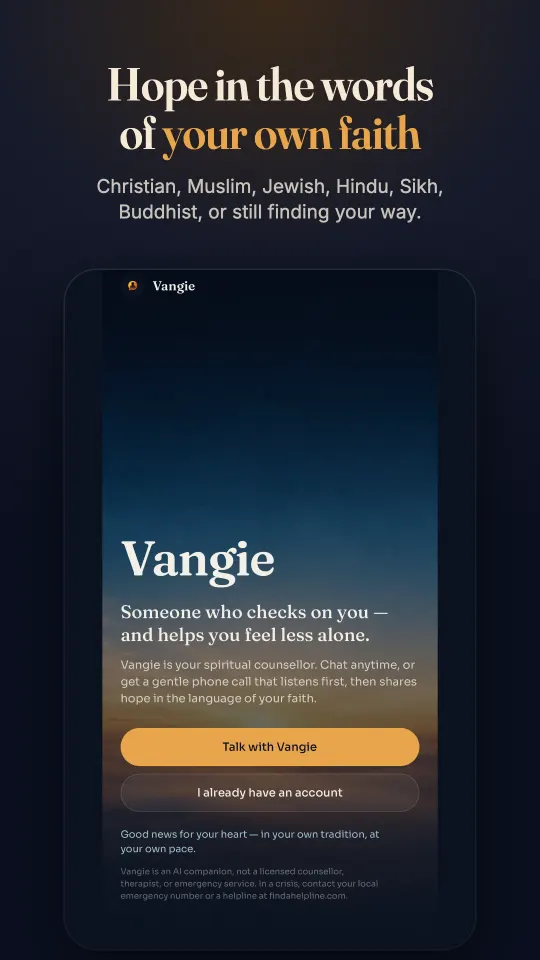
Someone who checks on you
Vangie is an AI companion you can talk to any time by chat, or by a gentle phone call that listens first. Choose Muslim as your tradition and she speaks from the Qur'an and hadith, searching for a passage before she quotes it rather than quoting from memory, and she says Qur'an, not scripture. She can make dua with you in your own words, keeps what you're praying for in your Journey and asks how it's going, and can check in with a call at the times you choose, for example after Fajr or before you sleep. She never pushes another faith, and she isn't a scholar or imam: for rulings, she'll point you to someone you trust.
General information, not medical or mental health advice. Vangie is an AI companion: not a licensed counsellor, therapist, doctor or member of the clergy, and not an emergency service. If you are worried about your mental health, talk to your GP or doctor; in the UK, NHS 111 can help if you need urgent help but it isn't an emergency.